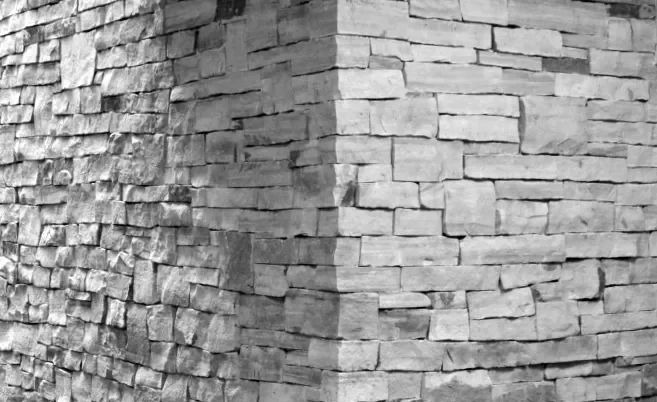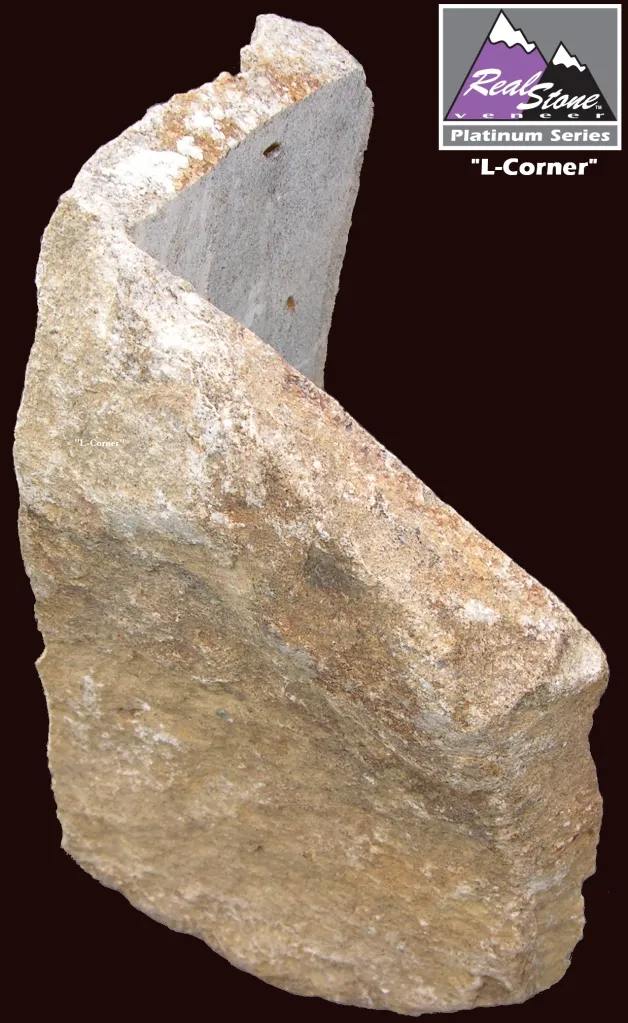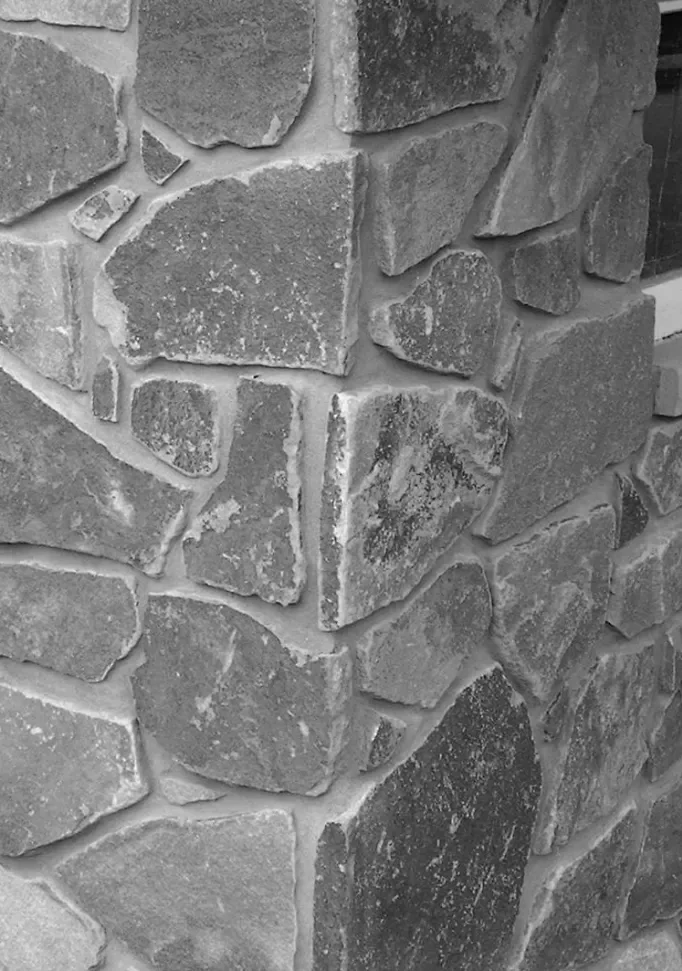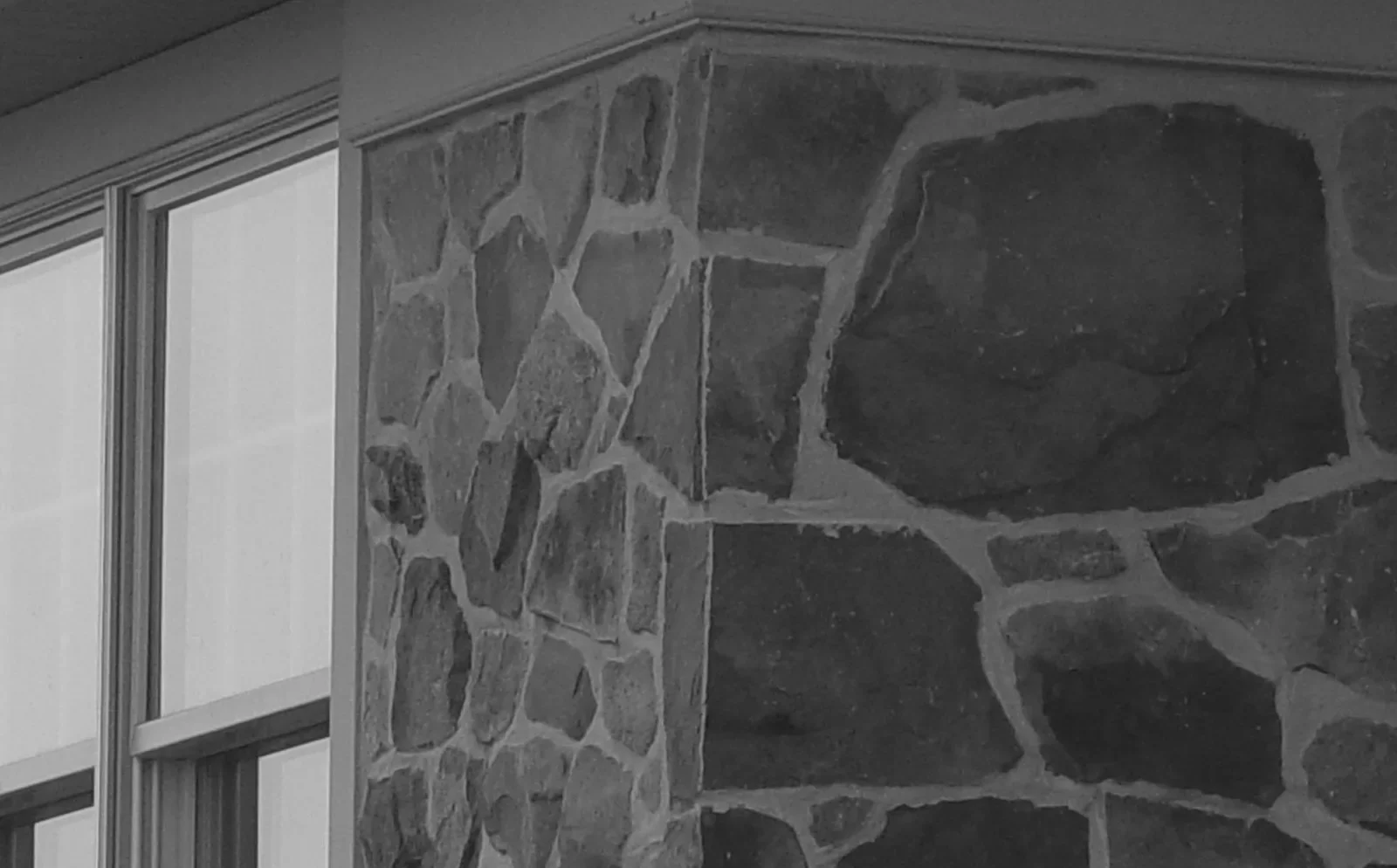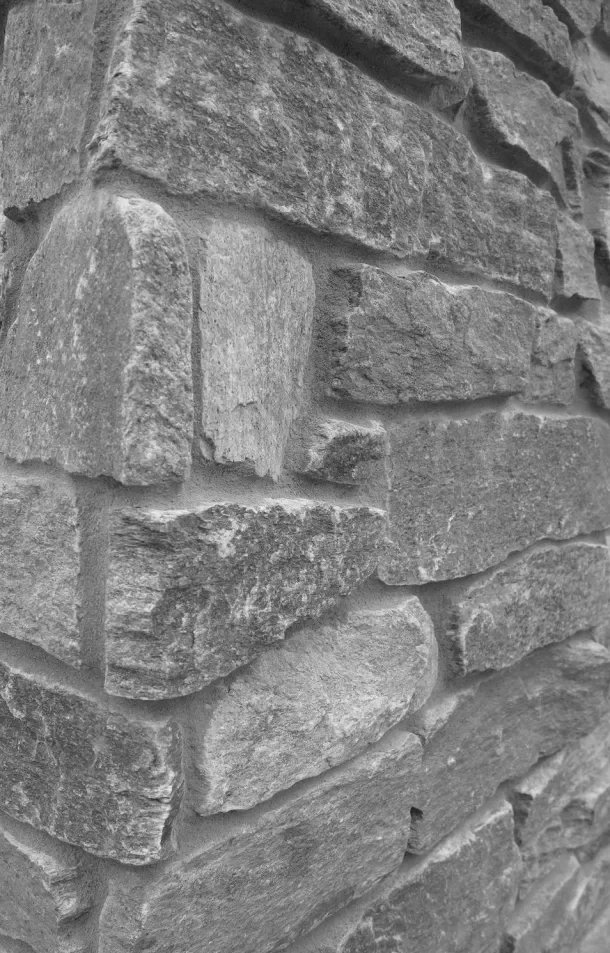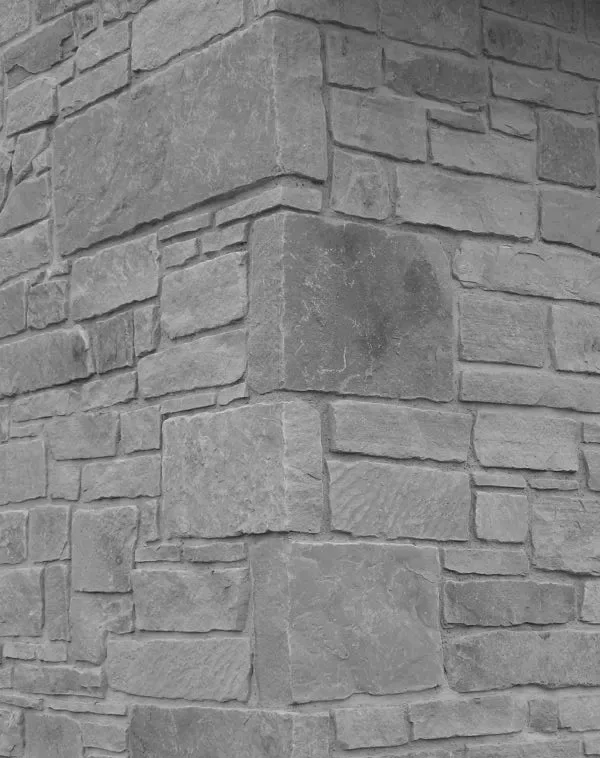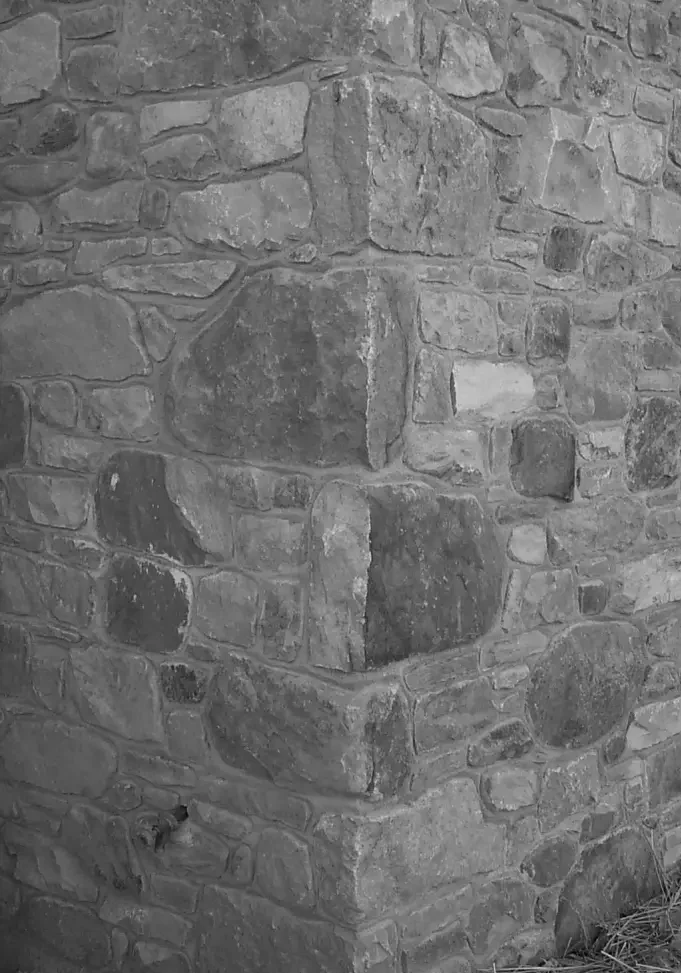

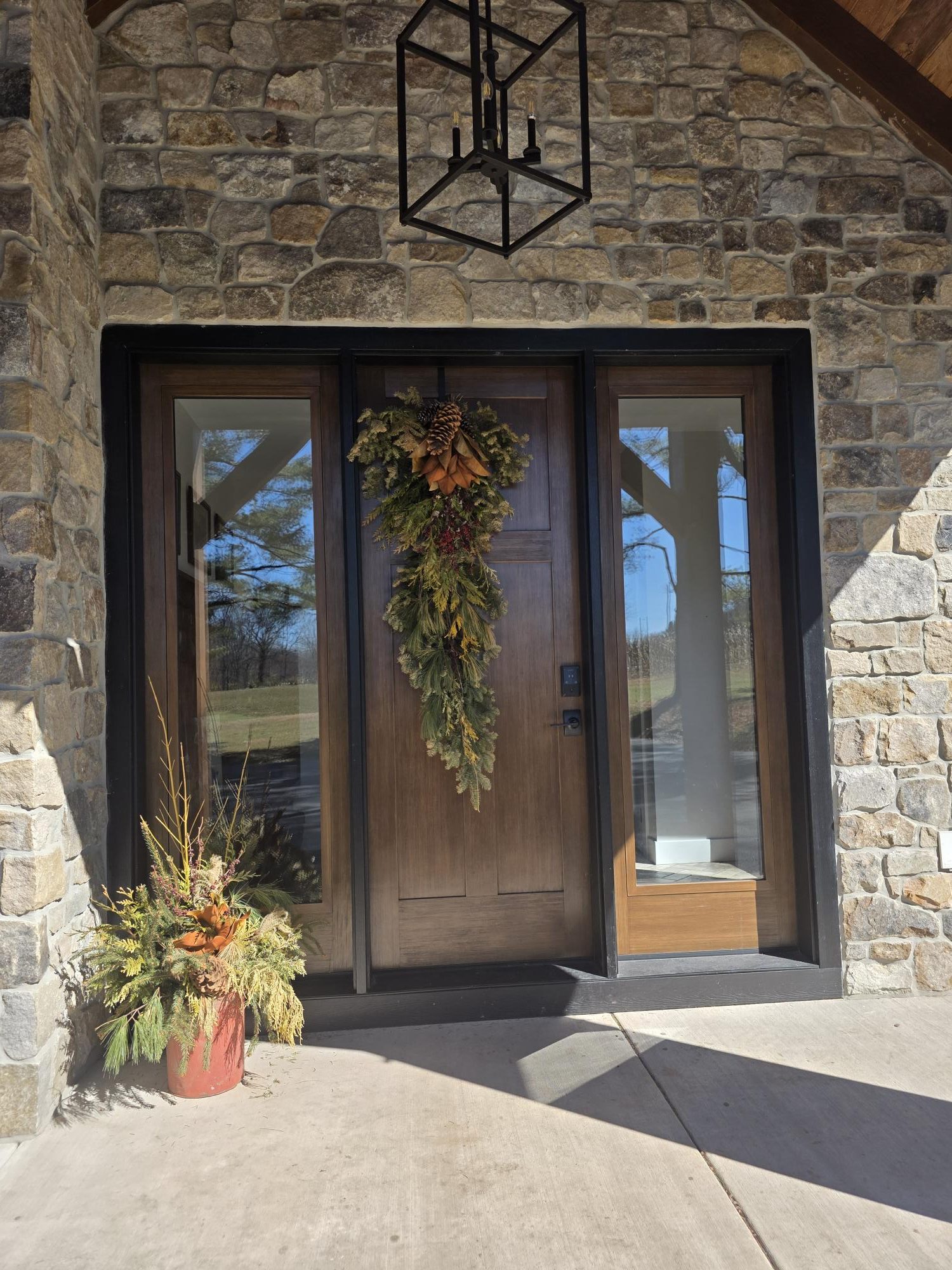
When choosing materials for a lasting architectural statement, nothing compares to the authenticity, permanence, and character of natural stone. It carries a distinct technical DNA that man-made, manufactured replicas simply cannot replicate.

However, one of the most common challenges in our industry is managing expectations when a finished, installed project doesn’t look exactly like a small showroom sample or a photo from a project completed years ago.

To help homeowners, designers, architects, and construction professionals navigate these realities, we have pulled together field-tested insights. This is the Ground Truth on why natural stone masonry projects vary—and how understanding these variables leads to flawless execution.

Mother Nature Doesn’t Use a Blueprint

Natural stone is not manufactured on an assembly line or quarried all at the same time. Because natural stone’s origin is from unique geological formations, variations in color, veining, and mineral composition are guaranteed over different production runs. By definition, a “match” in natural stone means similar or equal to another—it does not mean identical. Embracing this natural shift in texture and tone is what gives natural stone its unique beauty.

The Mason’s Hand is Part of the Design

A natural stone installation is a work of collaborative craftsmanship. No two mason contractors share the exact same style, eye for blending, or layout technique. If you are trying to match an existing project but hire a different mason, the finished look will inherently reflect that craftsman’s unique approach to sorting and placing the stone. Furthermore, if a mason passes over usable material on the job site instead of blending it into the wall, the final balance of color and shape will shift.

The Chemistry of the Wall System

Stone is only one component of a masonry system. The choice of sand, cement, lime, pre-bagged mixtures, or colored mortars heavily influences the final aesthetic. Beyond the materials themselves, the joint style (how the mortar is tooled and finished) and the joint color can completely alter the shadow lines and dominant color tones of the entire installation.

Post-Installation Handling Changes Everything

How the stone is treated after it is laid matters immensely. Cleaning stone with non-potable water or harsh chemicals can alter its surface condition and permanently change its appearance. Following technical best practices for post-installation cleanup is vital to maintaining the stone’s true, intended character.

Integrity in Specification

Occasionally, variations happen simply because a substitute stone was purchased instead of the exact product selected and specified by the customer. Ensuring clear communication between the designer, supplier, and installer secures that the material arriving on-site matches the vision on paper.

Let’s Build Together


Achieving a stunning natural stone project isn’t about eliminating these variables—it’s about managing them through definitive product guidance and proper planning.

Whether you are a homeowner visualizing your dream space, an architect detailing a premium facade, or a contractor managing a tight schedule, we are here to serve as your industry stewards. We can help you select the right materials, navigate technical best practices, and ensure your team has the field-tested insights needed for a successful installation.

Ready to select the perfect stone for your next project? Contact our team today so we can assist you in making an informed, beautiful choice that stands the test of time.

At Rolling Rock Stone, we serve as stewards of the natural stone industry, providing field-tested insights to help homeowners and professional contractors select materials built for permanence. While manufactured concrete alternatives occupy a specific segment of the market, authentic natural stone offers a unique combination of geologic durability, full-thickness integrity, and unreplicable organic beauty. This document provides definitive guidance on the structural and aesthetic advantages of choosing natural stone for your next landmark project.


1. Architectural Facing: Full Thickness Building Stone & Adhered Veneer

A structure’s facade requires a material that can withstand severe weathering while maintaining its original visual character over decades. Natural stone delivers unmistakable performance across both dimensional installations:

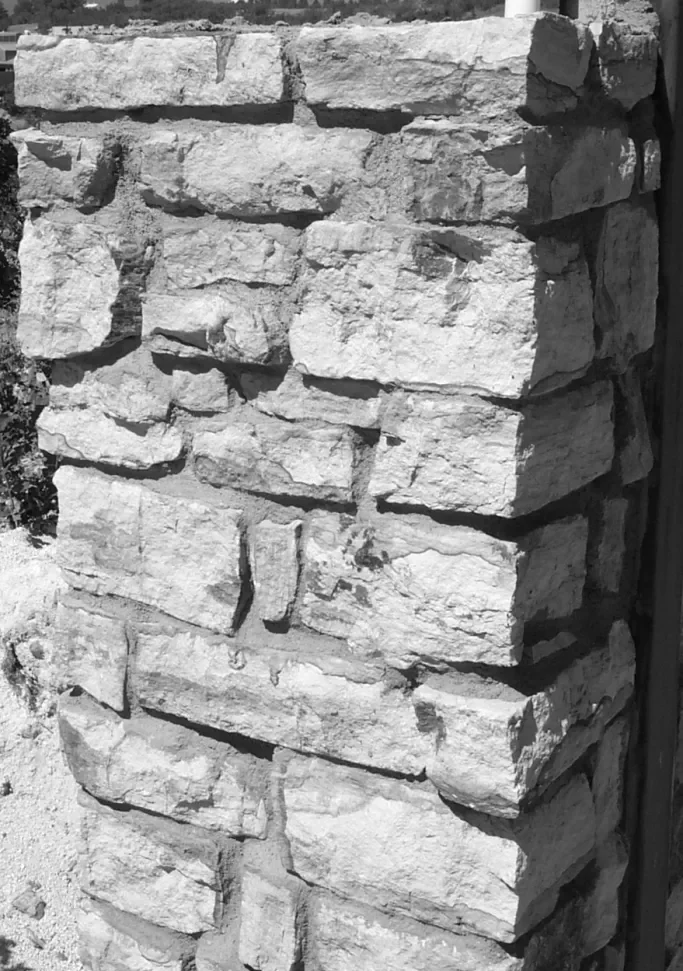
  • Full Thickness Building Stone: Providing structural mass and authentic bed depth, full thickness natural building stone handles load-bearing demands with unmatched geological durability. If hand-dressed or shaped by a mason on-site, the exposed surface carries the exact same full-thickness color, grain, and mineral structure forged over millennia.
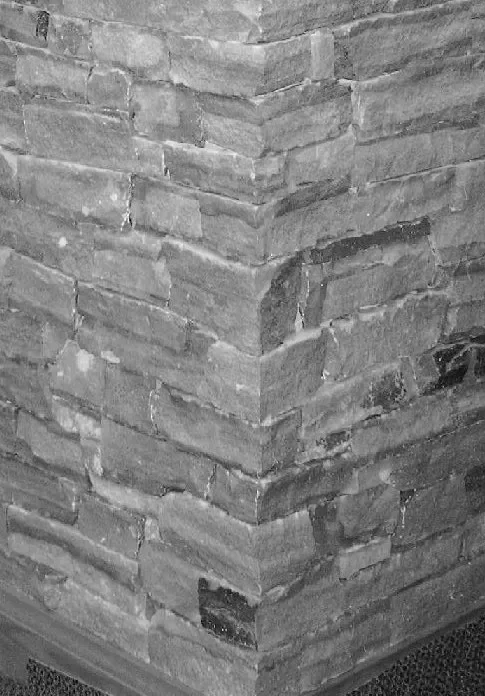
  • Adhered Thin Veneer: Delivering the identical prestige and full-thickness color properties as full-size stone, natural adhered thin veneer offers a lighter weight alternative without sacrificing authenticity. Because the interior carries the true geological matrix, any accidental surface nicks or field cuts reveal identical, rich color rather than a different colored concrete core.
  • The Concrete Comparison: Manufactured concrete veneer products rely on applied surface pigments and molded patterns over a standard grey cement base. Over time, harsh environmental exposure can lead to fading, and any field adjustments or accidental damage risk exposing the underlying grey core paste.

2. Wall Stone: Natural Mass vs. Repetitive Form

Retaining and freestanding walls must anchor the landscape through gravity, density, and structural grace:

Natural wall stone provides individual structural mass, deep tonal variation, and varied textures that ensure every build is entirely one-of-a-kind. Because no two stones are identical, walls constructed with natural material carry an organic authenticity that ages beautifully. In contrast, manufactured concrete block systems rely on uniform, repetitive patterns and molded textures that lack the structural depth and warmth found in natural formations.

3. Structural Retaining: Large Natural Boulders vs. Precast Modular Concrete Blocks

When engineering scale, erosion control, or critical grade changes demand high-volume retention, the choice of material impacts both structural longevity and visual integration:

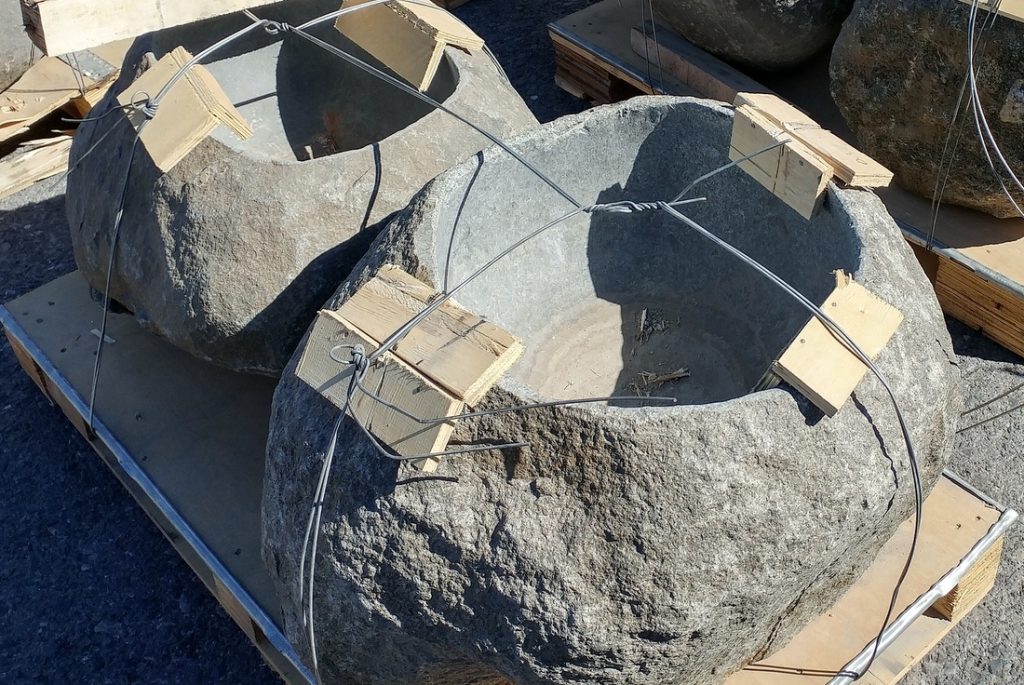
  • Natural Structural Boulders: Large natural stone boulders offer massive, uninterrupted structural weight and dynamic interlocking geometry. Because they are solid geological formations, they are fundamentally immune to internal aggregate deterioration, cracking, or crumbling from freeze-thaw water pressure. They provide a timeless, majestic barrier that blends seamlessly into hillsides, water features, and large-scale terrains, gaining structural character with age.
  • Precast Modular Blocks: Large engineered precast concrete block systems are built for quick mechanical stacking but introduce distinct limitations. Their industrial, blocky appearance creates a harsh, repetitive “highway-retaining-wall” look that can feel stark and commercial in premium residential or corporate landscapes. Furthermore, over extended wet winters, large precast systems are vulnerable to joint migration, efflorescence, and micro-fissuring from freeze-thaw cycles.

4. Steps and Treads: Defeating the Northeast Freeze-Thaw Cycle

Outdoor steps face intense physical wear and continuous exposure to the harsh, wet, cold winters of the Northeast.

Natural stone provides unmatched resilience where standard concrete often struggles:

  • Rolling Rock Natural Stone Steps: Utilizing premium, high-density natural geologies such as metamorphic Quartzites, dense Granites, quartz-bonded Sandstones, and premium Hard Limestones ensures maximum frost and moisture resistance. These dense, low-porosity materials provide slip-resistant surfaces that naturally resist the micro-cracking, scaling, and crumbling triggered by freezing water and salt application.
  • Manufactured Concrete Alternatives: While functional and uniform in dimension, concrete steps are inherently porous and highly susceptible to scaling, internal salt damage, and accelerated structural degradation over extended wet freeze-thaw cycles.

5. Patios, Walkways, and Living Spaces

Horizontal paving surfaces must endure heavy foot traffic while serving as an elegant extension of the home.

Choosing a climate-appropriate medium affects both long-term home value and everyday enjoyment:

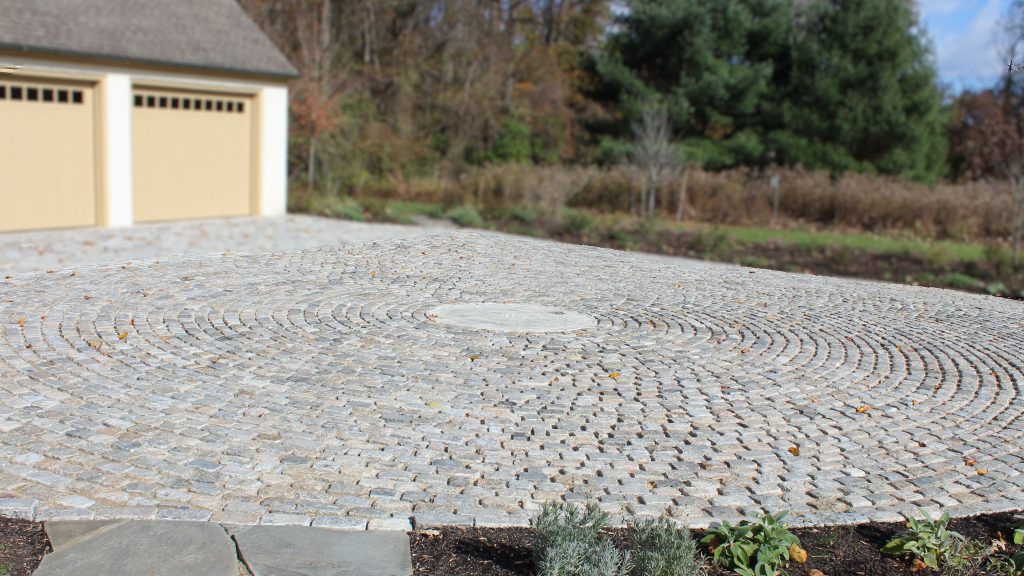
  • Authentic Depth & Durability: Natural flagstone and paving stones offer organic mineral gradients, subtle ripples, and unique veining that cannot be replicated by factory production lines. High-density geologies stand up beautifully to ice, heavy snow loads, and freeze-thaw cycles without losing structural integrity. As natural stone weathers, it develops a sophisticated patina that enhances its inherent value.
  • Graceful Aging: Unlike manufactured pavers, which can lose their crisp edges and vibrant surface colors as the top concrete layer erodes under snow plows and chemical de-icers, natural stone retains its foundational strength and prestigious appearance indefinitely.

Partnering for Permanent Landscapes

We respect the skill of trade professionals who manage diverse client needs and install a wide variety of project materials. When the goal is to deliver unmistakable prestige, permanent value, and structural integrity that never fades — even in the toughest winter conditions — we stand

In the natural stone industry, generic promises are common, but they rarely translate to the quarry floor, the cutting saw, or the job site. True industry stewardship isn’t built on corporate phrasing; it is driven by a practical cause-and-effect chain that dictates how we work, how we source, and how we deliver.
These values represent the ground truth of our daily operations, where one principle naturally demands and builds into the next.

Care: The Catalyst

Everything begins with care. We have a deep internal sense of responsibility for our work, operating under the absolute truth that all customers, partners, and employees matter. Care permeates everything we do—from how we precisely handle raw stone assets to the meticulous, field-tested insights we share to prevent installation errors. Without this deep sense of ownership, there would be no motivation to endure the daily hardships of quarrying and heavy manufacturing. Care is the purpose that sets our entire process in motion.

Grit: The Action

Because we care deeply about the final outcome, grit naturally takes place. Natural stone extraction and manufacturing are inherently demanding, but we confront obstacles with determination and resilience. Grit fuels our business when navigating complex international shipping lanes, sourcing new or additional raw materials, managing fluctuating stone yields, or ensuring strict stability under tight deadlines. We do not shy away from the hard realities of processing heavy, irregular materials. Our internal sense of responsibility drives the necessary grit to push through technical production hurdles and maintain material integrity.

Steadiness: The Outcome

When grit is applied consistently day after day, steadiness is the direct result. We are an enduring organization steady in the actions we take, the relationships we build, and the products we supply. Steadiness is the cornerstone of our success, but it cannot exist without the care and grit that precede it. By repeatedly overcoming obstacles, we deliver an authoritative presence and reliable consistency—in our inventory visibility, pricing, and long-term partnerships—that our clients can build upon for decades.

The Ground Truth

Grit, steadiness, and care are not separate, abstract concepts. They are a linked progression. By treating care as our catalyst, grit as our action, and steadiness as our hard-won outcome, we ensure that every piece of stone that leaves our facility lives up to our operational standards and the enduring strength of the material itself.