
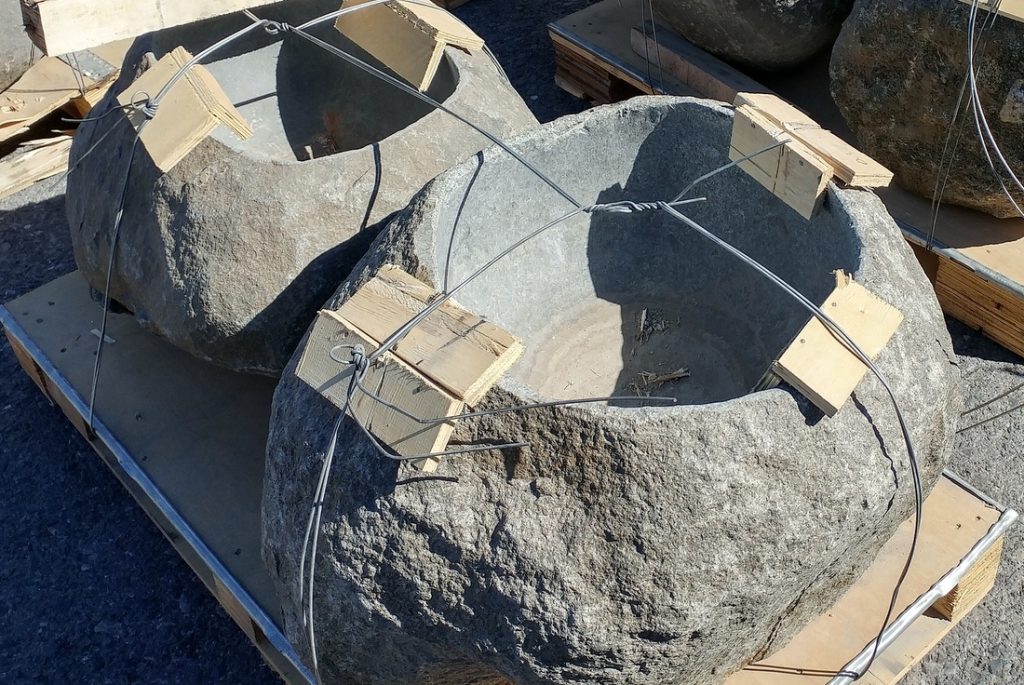
In our world, stewardship means dealing in physical reality, not sales talk. When we talk with architects, designers, masons, landscape contractors, resellers, builders, and homeowners about choosing materials for permanent builds, our perspective is straightforward: manufactured concrete products serve a purpose in the market, but they simply do not compare to the geological density, full-thickness integrity, and enduring value of authentic natural stone.
We see the difference everywhere we work—from the ledge in the quarry and the saws on our production line, to the job site enduring decades of harsh freeze-thaw cycles. Below is our field-tested breakdown of how natural stone performs when permanence is the goal.
1. Architectural Facing: Full-Thickness Stone and Adhered Thin Veneer
A facade must endure decades of severe weather without losing its character. We supply two primary forms, each delivering genuine geological strength:
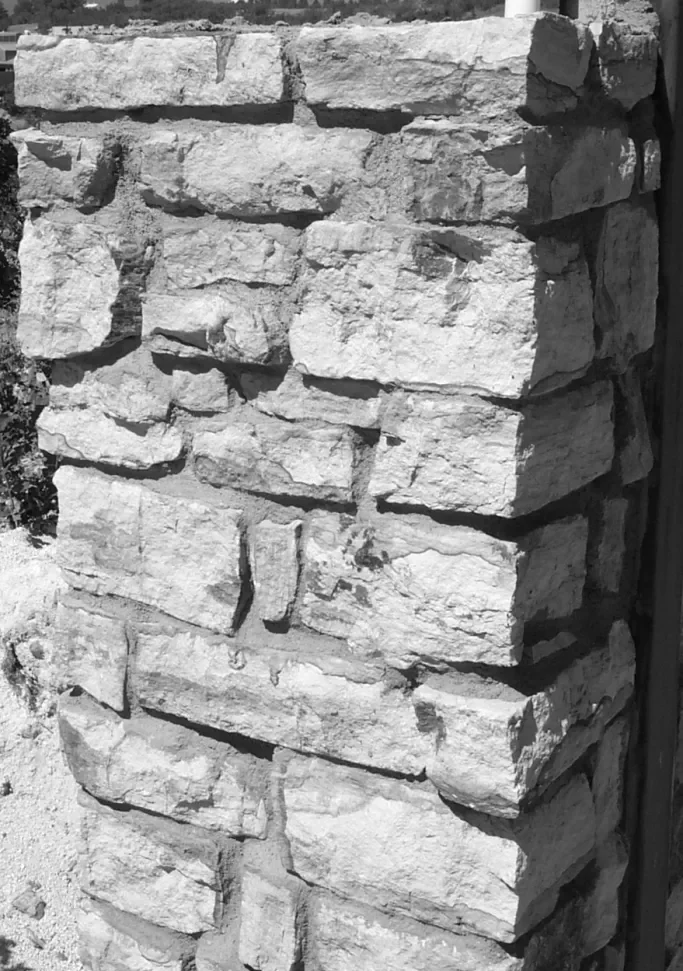
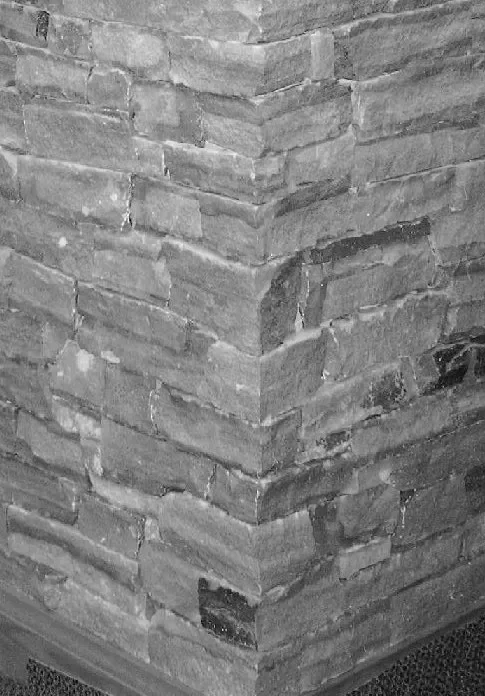
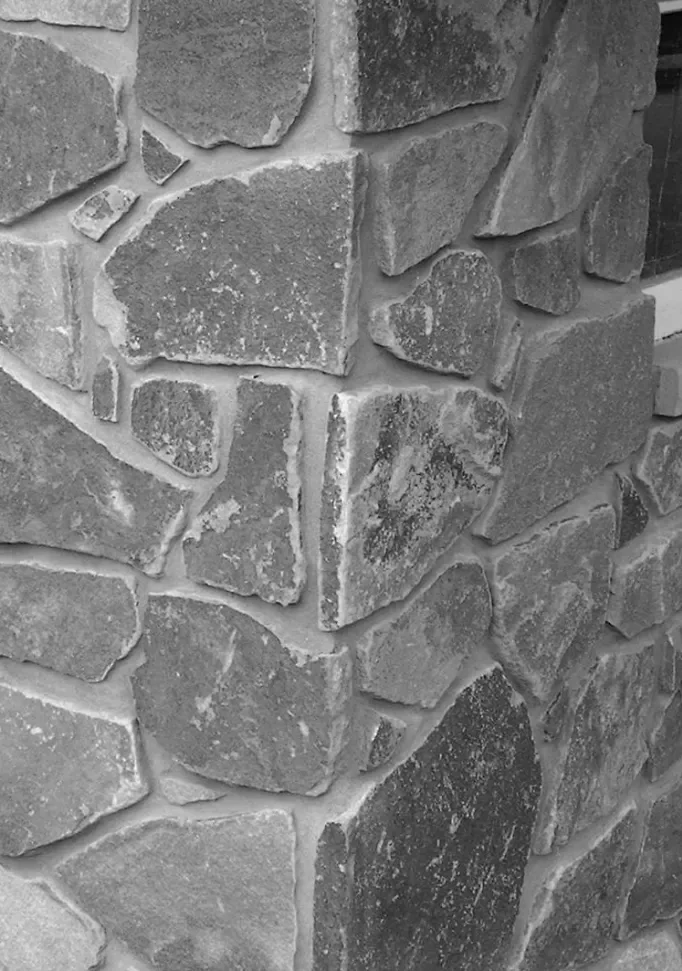
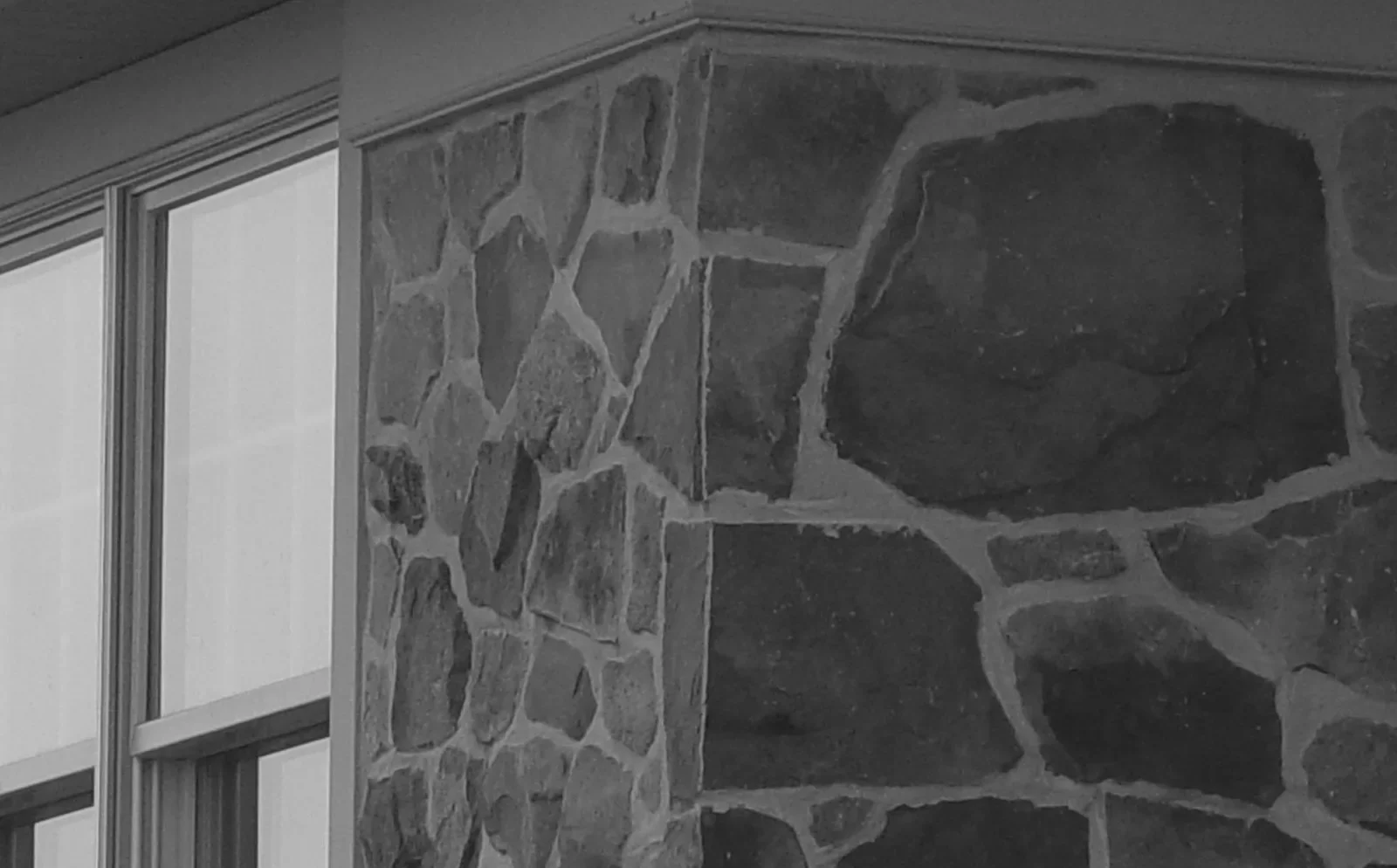
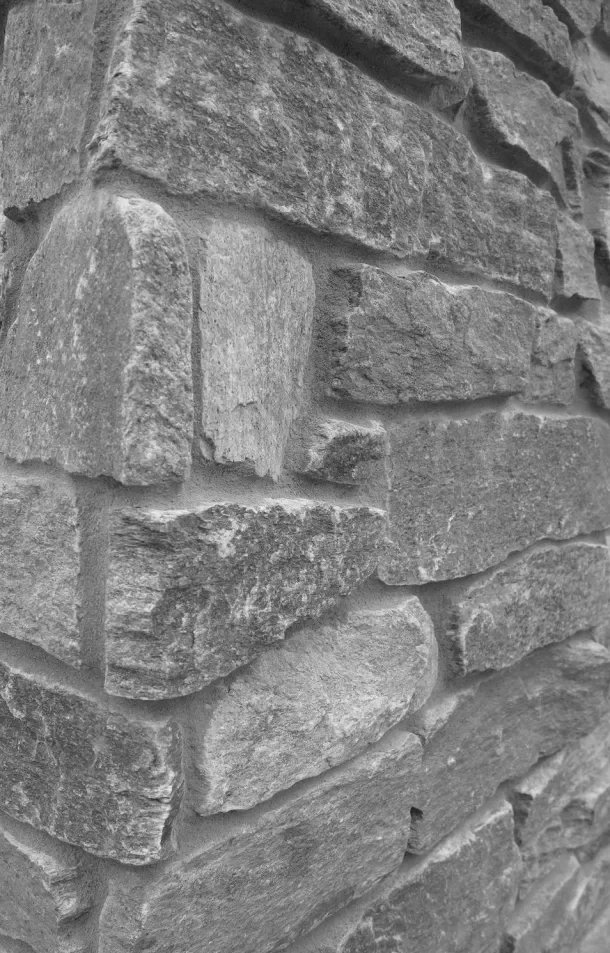
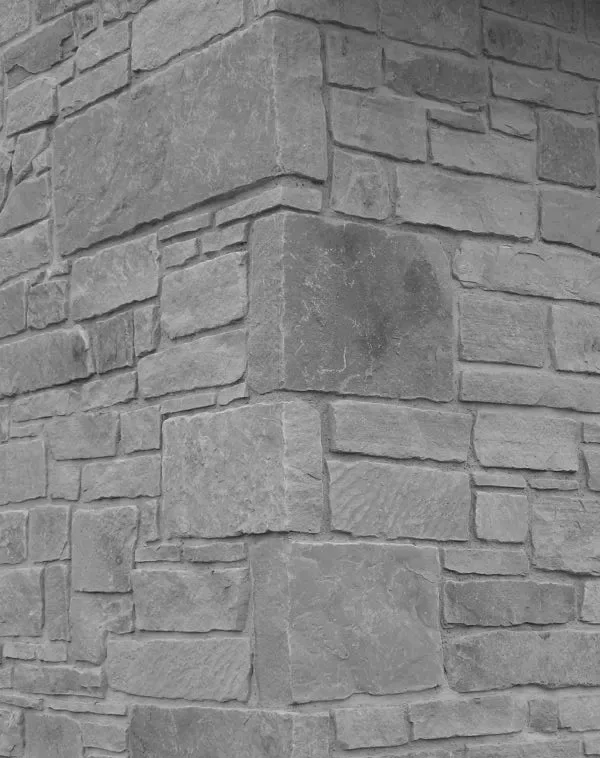
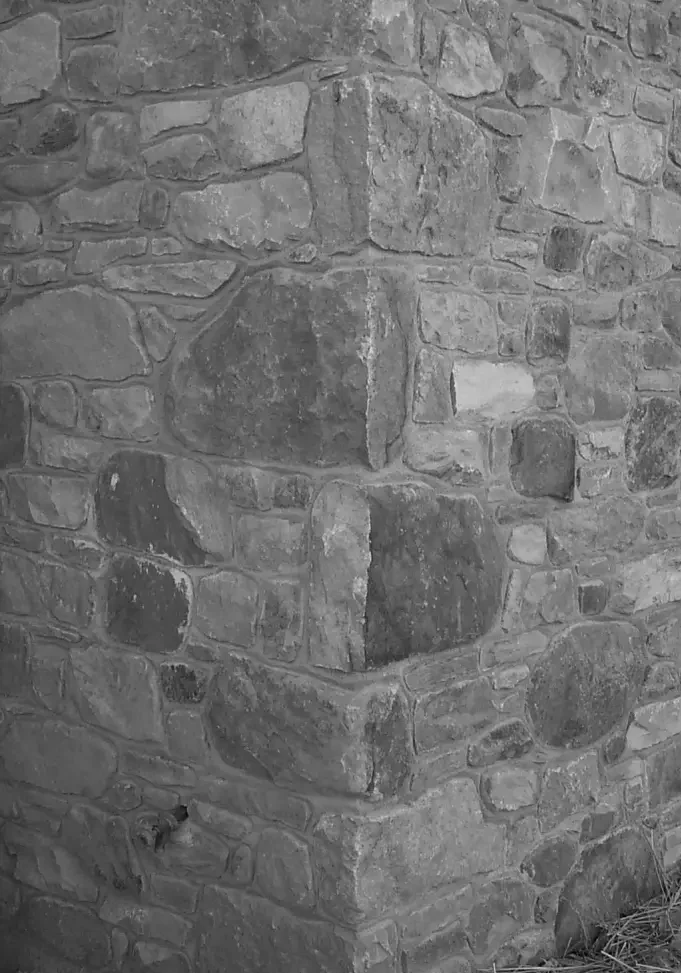
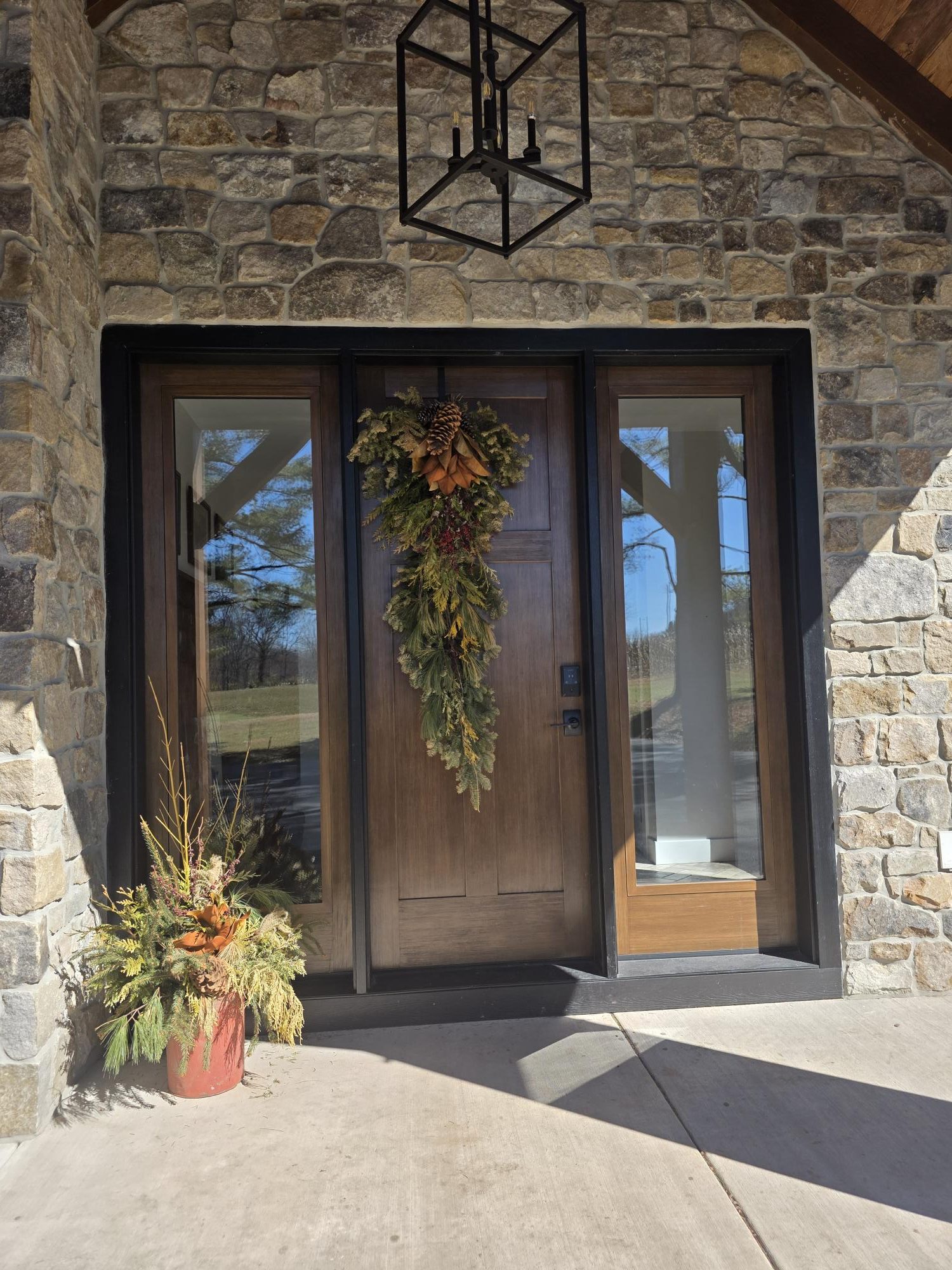
- Full-Thickness Building Stone: This provides authentic bed depth and true structural mass. When a mason dresses or splits a piece on the scaffold, the newly exposed face carries the exact same grain, mineral composition, and integral color formed over millions of years.
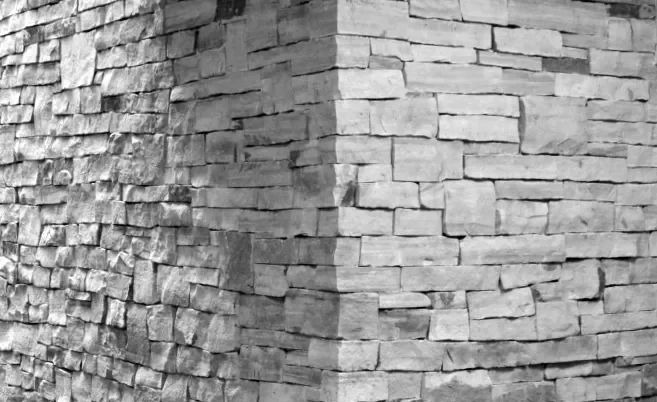
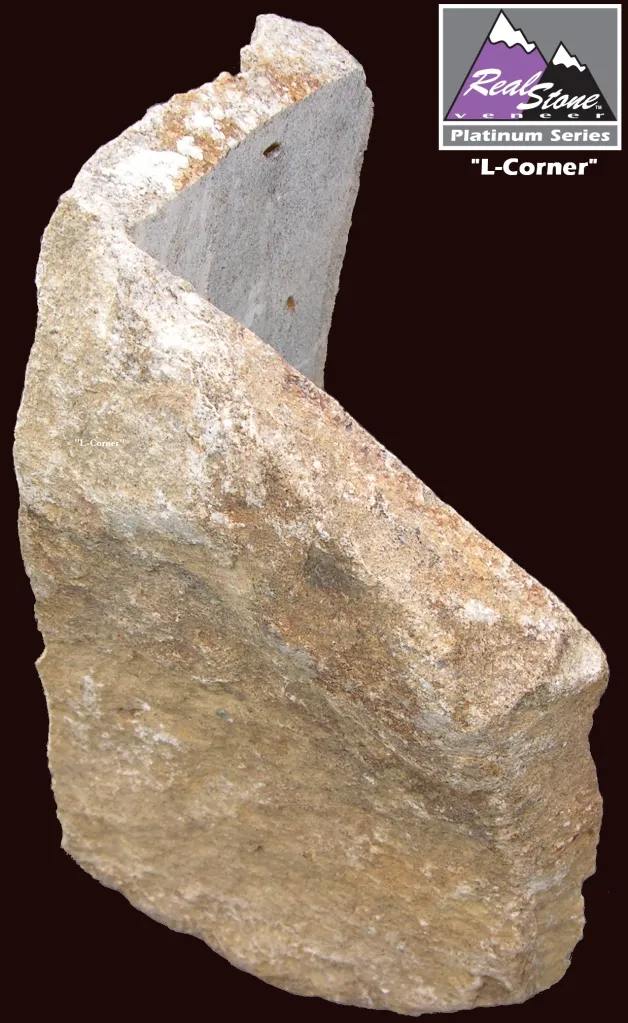
- Adhered Thin Veneer: We saw our thin veneer directly from full-thickness stone, giving you identical visual depth, texture, and prestige at a fraction of the weight. Because the mineral matrix runs all the way through, a job-site cut or accidental chip reveals solid color—never a hollow or different-colored core.
The Concrete Alternative: Manufactured veneer relies on surface dyes and molded textures sprayed over a standard gray cement paste. Over years of weathering, surface pigments fade with manufactured concrete veneers. Worse, any field cut, chisel mark, or nick exposes the underlying gray concrete core.
2. Wall Stone: Natural Mass vs. Repetitive Patterns
Freestanding and retaining walls should anchor the ground through weight, gravity, and organic line.
- Our natural wall stone delivers distinct structural mass and natural tonal shifts, ensuring no two builds ever look identical. As the wall weathers, it settles into its surroundings and gains character with age.
- By contrast, modular concrete block systems rely on repeating stamped patterns that feel rigid, industrial, and artificial in a custom landscape.
3. Structural Retaining: Natural Boulders vs. Precast Modular Blocks
When managing grade changes, heavy erosion control, or large-scale retention, material mass dictates performance:
- Natural Structural Boulders: Massive natural stone boulders bring dense, interlocking weight that works with the terrain. Being solid geological formations, they will not crumble, fissure, or lose integrity from freeze-thaw water pressure. They belong in the landscape and grow more distinguished as decades pass.
- Precast Modular Blocks: Precast systems stack fast with heavy machinery, but they often leave residential and commercial properties with a cold “highway barrier” look. Over wet winters, large concrete block walls frequently face joint shift, efflorescence, and micro-fissuring as moisture works into the aggregate.
4. Steps and Treads: Standing Up to the Freeze-Thaw Cycle
- Horizontal step treads face the most punishing physical wear—continuous moisture, foot traffic, and rapid freezing.
We select high-density, low-porosity geologies—including metamorphic quartzites, dense granites, quartz-bonded sandstones, and premium hard limestones. These tight mineral structures resist the micro-cracking, spalling, and crumbling caused by freeze-thaw expansion. - By contrast, cast concrete steps are naturally porous. Repeated freeze-thaw cycles and winter salts break down the cement binder, leading to surface scaling and premature degradation.
5. Patios, Walkways, and Living Spaces
A horizontal living surface must handle foot traffic and hard weather while extending the living area naturally.
- Natural flagstone and paving materials provide authentic texture, mineral veining, and subtle natural clefts that factory molds cannot mimic. High-density stones hold up against snow loads and ice without breaking down, developing an authentic patina over time.
- Manufactured pavers tend to show their age prematurely. Snow equipment, foot traffic, and winter weathering scour the thin topcoat of colored aggregate on manufactured pavers, exposing the plain gravel-and-cement mix beneath.
Our Standard in Practice
We respect the craftsmanship of trade professionals who work across all types of materials to meet client demands. Whether you are an architect detailing a vision, a landscape contractor, mason, or builder executing on the site, or a homeowner planning a multi-generational property, our commitment is steady: supplying genuine natural stone backed by field-tested guidance.
Let’s talk about your next build. We can walk through current runs in the yard, verify material availability, and help you select stone built for permanence.